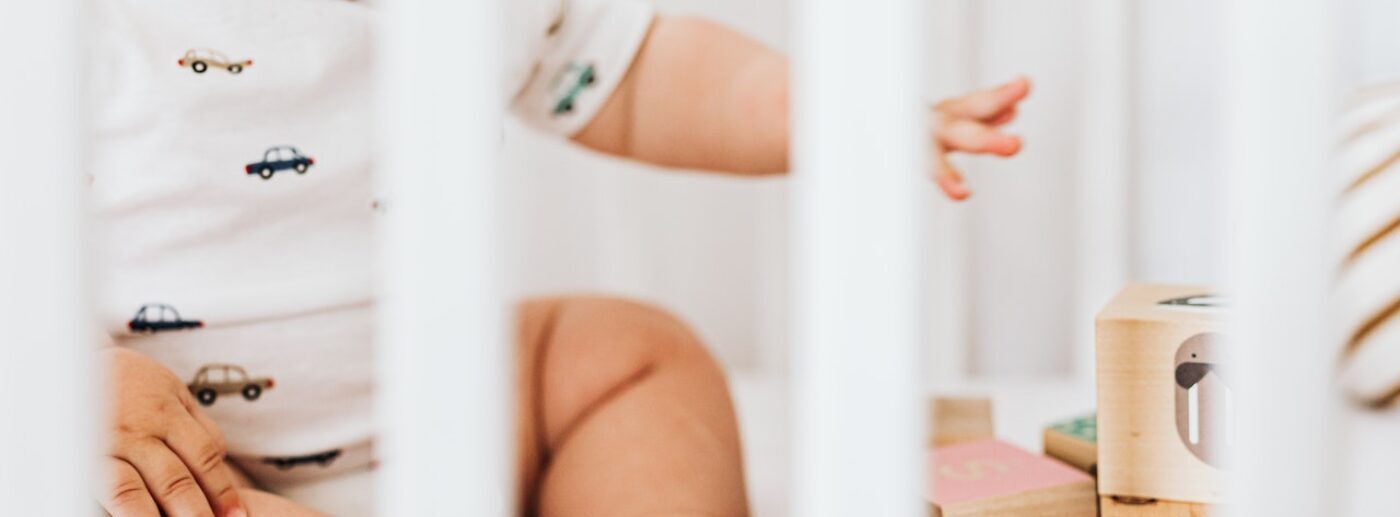
When setting up a nursery for your baby, there are certain items that you should avoid to ensure your baby’s safety. By taking the precautions described here, you can create a safe and functional nursery for your little one. This is, of course, very important. Not only do you want a beautiful nursery room, but you want it to be safe and convenient. Remember to always follow current safety standards and recommendations from the American Academy of Pediatrics when setting up your nursery. By prioritizing safety and avoiding any potentially hazardous items, you can create a peaceful, calm and welcoming space for your baby to grow in.
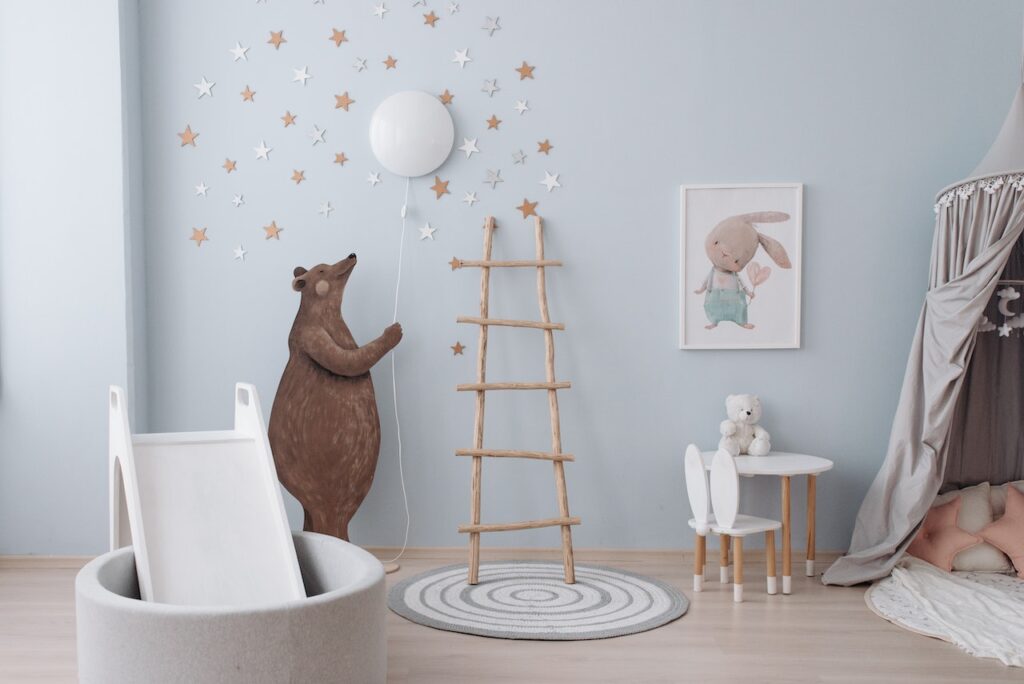
In this guide, we’ll explore what not to put in a nursery.
What should you not have in your baby’s nursery?
1. Crib Bumpers:
Crib bumpers are padding that lines the inside of a crib to prevent the baby from hitting their head on the hard crib rails. However, crib bumpers pose a suffocation hazard to young infants who may get trapped against them. It’s best to avoid crib bumpers altogether and instead choose a firm, breathable crib mattress and fitted sheets that fit tightly around the mattress.
2. Soft Bedding:
Soft bedding, such as blankets, pillows, and stuffed animals, can pose a suffocation risk to young infants. The American Academy of Pediatrics recommends that babies sleep on a firm, flat surface with no soft objects or loose bedding. It’s best to avoid soft bedding altogether and instead choose breathable, fitted sheets that fit tightly around the mattress.
3. Loose Cords and Strings:
Loose cords and strings can pose a strangulation hazard to young infants. It’s best to avoid any items in the nursery that have long cords or strings, such as window blinds or decorative mobiles. If you must use window blinds, choose ones with a cordless design or make sure the cords are out of reach of the baby.
4. Drop-Side Cribs:
Drop-side cribs have a side that can be lowered to make it easier to reach the baby. However, drop-side cribs can pose a serious safety hazard, as the mechanism that allows the side to lower can malfunction, resulting in the baby becoming trapped or suffocated. It’s best to avoid drop-side cribs altogether and choose a sturdy, fixed-side crib that meets current safety standards.
5. Decorative Items:
Decorative items, such as wall art, picture frames, and sculptures, can pose a risk to young infants if they fall or are pulled down. It’s best to avoid placing any decorative items within reach of the baby’s crib or changing table. If you do choose to decorate the nursery with wall art or other decorative items, make sure they are securely fastened to the wall.
6. Harsh Chemicals:
Harsh chemicals, such as cleaning products and air fresheners, can be harmful to young infants, who are more susceptible to respiratory problems. It’s best to avoid using any harsh chemicals in the nursery and instead opt for natural cleaning products or air purifiers.
7. Space Heaters:
Space heaters can pose a fire hazard in the nursery, especially if they are placed too close to the baby’s crib or bedding. It’s best to avoid using space heaters in the nursery altogether and instead use a warm, but not hot, room temperature to keep the baby comfortable.
8. Oversized or Heavy Furniture:
Oversized or heavy furniture can pose a risk of tipping over and injuring the baby. It’s best to choose furniture that is appropriately sized for the nursery and secure any furniture to the wall to prevent it from tipping over.
9. Secondhand or Old Furniture:
Secondhand or old furniture can be a source of lead paint, which can be harmful to young infants. It’s best to avoid using secondhand or old furniture in the nursery altogether and instead opt for new, non-toxic furniture.
10. Scented Products:
Scented products, such as perfumes, candles, and air fresheners, can be irritating to young infants, who are more susceptible to respiratory problems. It’s best to avoid using any scented products in the nursery and instead opt for natural, unscented products.
Scented products, such as perfumes, candles, and air fresheners, can be irritating to young infants, who are more susceptible to respiratory problems. It’s best to avoid using any scented products in the nursery and instead opt for natural, unscented products.
But if you do wish to use scented items in a baby nursery, it’s best to opt for natural and mild scents that won’t irritate the baby’s delicate respiratory system. Here are some safe and gentle options:
Essential Oils:
Essential oils can provide a natural and soothing aroma in the nursery. It’s important to use high-quality, pure essential oils and to use them in a diffuser, which will safely disperse the scent into the air.
Lavender:
Lavender is a gentle and calming scent that can promote relaxation and improve sleep quality for both parents and baby. You can use a lavender-scented spray or add a few drops of lavender essential oil to a diffuser.
Vanilla:
Vanilla is a comforting and warm scent that can create a cozy and inviting atmosphere in the nursery. You can use a vanilla-scented candle or add a few drops of vanilla essential oil to a diffuser.
Chamomile:
Chamomile is a gentle and calming scent that can promote relaxation and improve sleep quality for both parents and baby. You can use a chamomile-scented spray or add a few drops of chamomile essential oil to a diffuser.
It’s important to avoid harsh and synthetic scents, which can be irritating to young infants. By choosing natural and mild scents, you can create a peaceful and inviting atmosphere in the nursery without compromising your baby’s health and well-being.
Conclusion:
When setting up a nursery for your baby, it’s important to prioritize safety and avoid any items that could pose a risk to your baby’s health and well-being. Avoiding crib bumpers, soft bedding, loose cords and strings, drop-side cribs, and oversized or heavy furniture can help prevent accidents and injuries in the nursery. Additionally, avoiding harsh chemicals, space heaters, secondhand or old furniture, decorative items within reach of the baby, and scented products can help create a safe and healthy environment for your baby.
By taking these precautions, you can create a safe and functional nursery for your little one. Remember to always follow current safety standards and recommendations from the American Academy of Pediatrics when setting up your nursery.